
The Art and Science of Connecting with the God Within
In Hinduism, the Atman, or soul, is one’s eternal Self. The Atman resides in all living creatures, the Atman itself gives the materialistic body life. The Atman is all-knowing; it comes from the supreme God, Brahman. Thus, it is essentially a part of the supreme soul, God. One can say that God resides in oneself because all souls converge with Him, the supreme soul, and power.
What is Trance
The etymology of the word “trance” derives from the meaning of “swoon,” which refers to a fainting spell or a temporary state of unconsciousness. It also describes a half-conscious or insensible condition, as well as an ecstatic state in which a person is unaware of mundane things, a state in which the Soul appears to have left the body and entered another realm of existence. Additionally, “trance” functions as a verb, related to the prefix “trans-“, as in transit, meaning to go across or pass over. Thus, the term “trance” represents both a state of consciousness and a movement of awareness from the ordinary to the spiritual.
Trance is a state of insensibility or unconsciousness to the mundane, physical, or external reality. It involves deliberately withdrawing attention from surface-level distractions, allowing deeper intelligence to take over. More importantly, trance serves as a vehicle for the Soul and mind to unite. It can be a time and place to download your life’s purpose to your conscious mind, enabling you to live with greater clarity and peace.
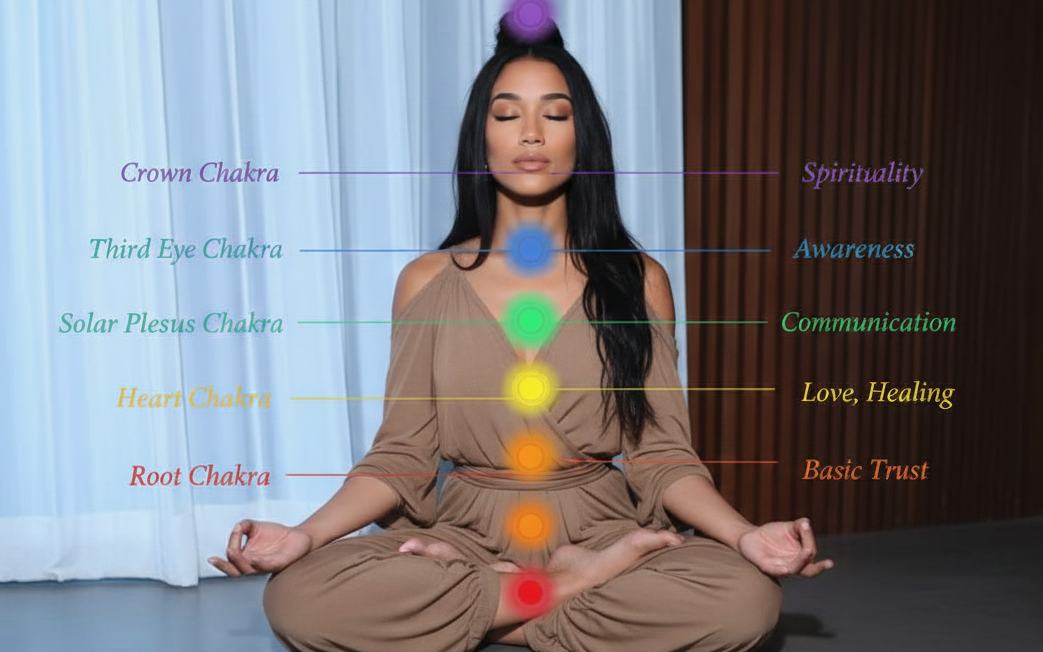
Auto-pilot is the opposite of Trance
Most people go through life on autopilot. They react, repeat patterns, and mistakenly believe that progression is the same as positivity. Their nervous systems are overstimulated, their minds are scattered, and their decisions are driven by survival instincts or habitual behavior, rather than being in tune with their true selves. When meditation is treated as an optional activity, it becomes just another task performed on autopilot. This is why incorporating trance into your meditative practices is essential; it helps you take control of your mind and shape your outlook on life and yourself in positive ways.
Auto-pilot is the enemy of Alignment.
Autopilot is not benign or harmless. I represents a lack of conscious direction; when the soul is disconnected from the conscious mind, the body and mind react on autopilot, guided by past experiences, emotional reflexes, and unexamined motives. This is why hard work often fails to yield substantial rewards. While hard work can be practical when driven by purpose, many people engage in it to survive and never progress beyond mere survival.
Trance stops the process of thousands of thoughts per day and moves towards being inwardly directed by a present and powerful force, the soSou I, the soSoulf, waiting and reacting to life. You can be intentional and assertive about how your life will be through trance and meditation. It is the crux of the spiritual life.
Living spiritually means recognizing that spiritual opportunities are always available to us. The spiritual life itself is not a miracle; instead, it involves the continuous preparation for miracles. Many religious individuals talk about heaven or Jannah, believing that they must die to experience these places. In reality, the ability to access these experiences lies in entering a trance state. By cultivating mindfulness, meditation, and deeper awareness, we can tap into the divine elements within our lives here and now.
The environment is the Gateway to the Soul.
Soulenvironment is neither benign nor harmless. Everything you see, hear, smell, and feel directly influences your consciousness, which then shapes your life. Most wealthy homes are clean because tidy environments promote stability and positive actions. In contrast, dirty environments create the opposite effects on consciousness and outcomes. There is a popular saying: “Cleanliness is next to godliness.” While” this may seem like common sense to some, it is essential to emphasize that having a clean environment is crucial for entering meditative states.
A chaotic environment can overwhelm the senses, making it significantly more challenging to enter a trance or a mild trance. This is because the stimulation of the senses continually pulls attention outward, interrupting the mind’s focus. This is why every serious spiritual tradition emphasizes the importance of a specific environment—like a temple, mosque, or church. Such spaces signal to the subconscious that it is time for spiritual practice. At the same time, one does not need to be in a mosque to connect with the atman; it’s essential to keep this in mind when creating a space for meditation.
Silence, specific sounds, the amount of light, and scent are all important. Tools exist to help you withdraw from the external world.
- Silence or controlled sound (meditation music, headphones, earplugs)
- Stillness and rest
- Incense, resins, sage, smoke
- Candles and low light
- Blindfolds or masks
- Intentional sensory deprivation
Whichever tool you choose, keep your goal simple: move away from the mundane and immerse yourself in the sublime nature of reality through conscious awareness. It is essential to work with the body, mind, and soul to enter a trance state. Entering a deep meditation solely through thought is nearly impossible; for example, if your environment is messy or chaotic, or your mind is cluttered, achieving deep meditation is highly unlikely.
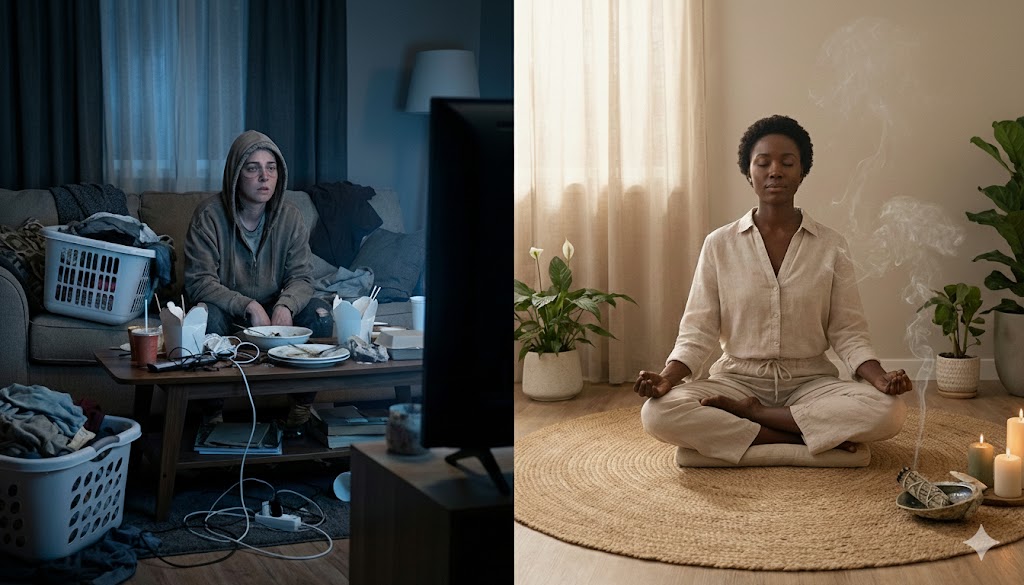
Meditative Environments are portals.
Consider your environment as a portal; it’s the last thing you sense before meditation and the first thing you notice when you return. Our entry and exit points are essential, which is why many people struggle to reach these states; they haven’t taken the time to create the right conditions for entering a trance or a relaxed state. Being mindful of what exists in your environment both before and after meditation is crucial to whether you can meditate successfully.
While it’s not essential to meditate in any circumstance, it becomes much easier with proper preparation. Think of it like a plane: it can theoretically take off and land anywhere, but it’s far more convenient to do so at an airport.
Trance, Magic, and Meditation
To practice magic, you must align with your will rather than merely reacting to external stimuli. Giving from the will requires focus and concentration. Rance serves as a gateway to the sSoul, which is the sSoul’s portion of the divine creator that operates through you at all times. Restlessness indicates that your body and mind alert you to your disconnection from this source. By concentrating on your soul, you shape your perception of it.
Trance is a gateway to the Soul, which is a portion of God, the Creator, operating within you at all times. Restlessness is not a flaw; it is the body’s and mind’s signaling a disconnection from your source and a fragmentation of attention. When your awareness is redirected inward and placed on the soul, you will no longer be restless; you will be connected. By deliberately engaging with sound, imagery, shape, breath, and scent, purposefully, the mind is trained rather than quieted. Over time, this training strengthens focus and concentration, allowing you to enter trance intentionally rather than accidentally, and to remain connected while fully awake and present.
Trance benefits any advanced student, worker, or practitioner by allowing them to operate at a high level by accessing deeper layers of the indwelling intelligence. In this state, perception moves beneath surface information and into direct understanding. Concepts are grasped intuitively rather than mechanically, which makes progress appear effortless compared to those who rely solely on external validation to confirm their growth.
Genius, then, is not a matter of working harder or studying longer, but of entering the sublime within oneself—where answers to life’s questions are life’s present. This is the capacity to access what Carl Jung called the collective unconscious: a shared field of intelligence beyond personal memory. This should not be confused with rote learning, test preparation, or acquiring a skill from a teacher alone. Instruction still matters. However, even during formal education, a mild trance state is ideal. It is the condition in which knowledge is absorbed efficiently, integrated deeply, and retained rather than forgotten.
When in a trance, internal imagery feels real; if it’s real internally, it becomes real externally. Just because you get to know someone on a superficial level, it doesn’t mean you know them. It is the same way people misunderstand spiritual concepts; they think that surface-level thoughts alone can bring something into reality.
Neuroplasticity and Meditation
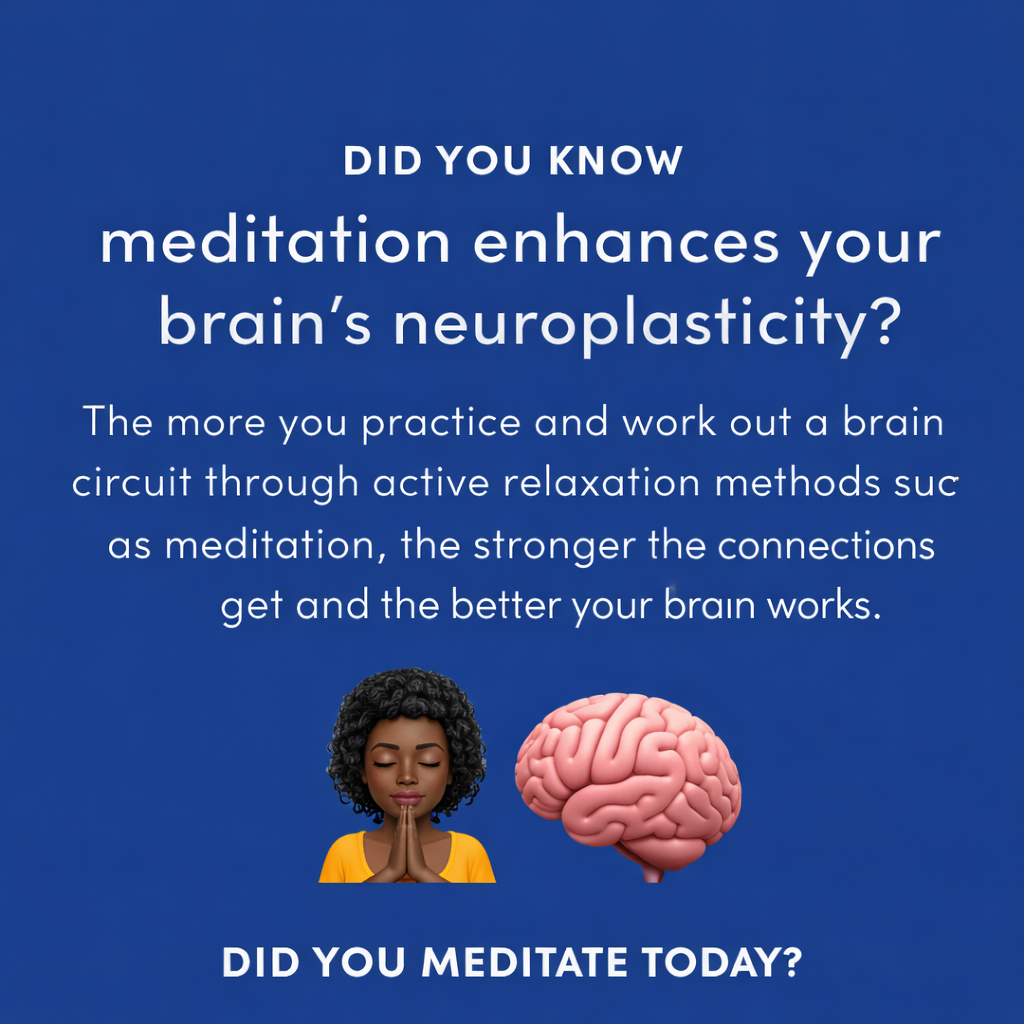
The consistent practice of mindfulness meditation results in neuroplasticity, which brings about observable modifications in different areas of the brain, associated with managing emotions, focusing, and being conscious of oneself.
Neurobiological Changes Induced by Mindfulness and Meditation: A Systematic Review
Neuroplasticity, also known as neural plasticity or brain plasticity, is the process by which the brain undergoes adaptive structural and functional changes. Have you ever been in love and had your heart broken? Then you know it’s hard for people to change at their core. This is the lack of neuroplasticity. Say you want to improve your finances or change your life for the better, but your habits get the best of you. This is the lack of neuroplasticity. o re h a receptive point in your brain for change, you must meditate.
Since most people think compulsively, without direction, reacting, and acting on habits, the way to “concentrate” is through the modality of di”traction: p”one, TV, video games, and other similar things. Which gives the impression of meditation, but at their core, are you being distracted from yourself? When you realize that magic requires focus and concentration, you will understand why many people view it as an illusion. Because all people are compulsive and not meditative, magic is found through the individual’s ability to meditate.
How to Enter Trance
Trance is not forced; it is allowed once interference is removed. The following steps are sequential and should be approached without haste.
- Stabilize the Body (Motionlessness)
Sit or lie comfortably and remain completely still. Do not just posture or react to discomfort. iscomfo t signals the nervous system to release control. Begin with 5 minutes and work toward 15. - Stabilize the Nervous System (Breathing)
Maintain stillness while breathing slowly and deeply. Breathe with full lungs without strain. Place full attention on the breath cycle. Breathe as if the bridge between body and mind. - Quiet the Mind (Not-Thinking)
Observe thoughts as they arise without following or resisting them. Allow them to dissolve. Even after a few seconds of mental silence, the beginning of the trance is marked. - Anchor the Verbal Mind (Sound)
Silently repeat a simple, neutral sound. When thoughts intrude, return to the sound. Over time, internal dialogue loses dominance. - Anchor Visual Attention (Object Focus)
Fix attention on a meaningless object without analysis or interpretation. Meaning relates to desire; desire disrupts trance. - Develop Inner Vision (Image Focus)
With eyes closed, hold a simple shape in the mind without distortion. - Enter Mild Trance (Gateway State)
When the body is still, breath is slow, thoughts are minimal, and attention is unified, a mild trance emerges. This is the ideal state for meditation, learning, creativity, and spiritual work.
Sources | Metu Neter | Chakra Nova